Drain Cleaning Cost 2026: Real Prices From a Drain Tech
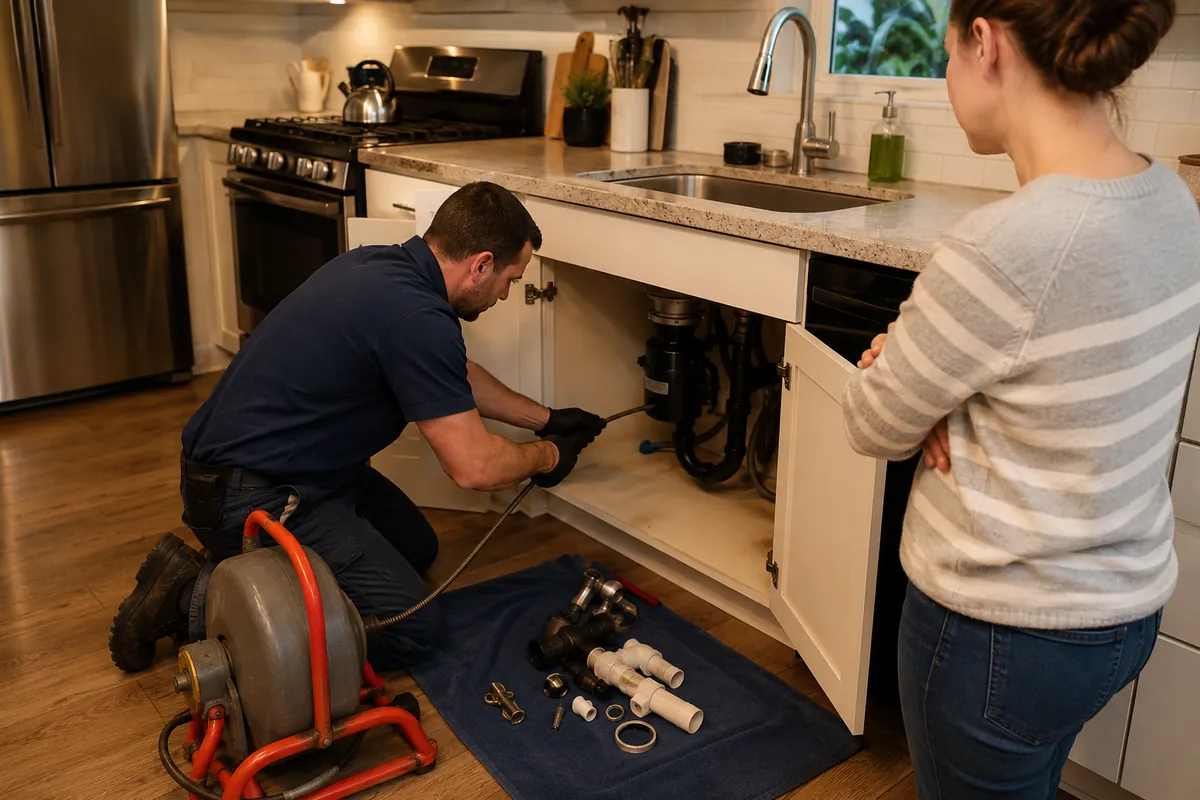
Drain cleaning cost: a simple branch-line snaking runs roughly $150 to $300, a main-line clearing $250 to $600, hydro jetting $400 to $900, and a camera inspection $150 to $400, with the price driven mostly by access and how nasty the clog is.
I've been pricing and clearing drains for fifteen years, and I've also spent fifteen years watching homeowners get hosed by the $99 coupon that magically becomes a $400 invoice. So I'm going to lay out what this work actually costs, how an honest tech prices it, and exactly which sales tactics should make you close the door.
Prices vary by region and by how bad the job is, so treat these as working ranges, not quotes. If you want to understand the service differences behind the numbers, my piece on hydro jetting versus snaking pairs with this one.
What You're Actually Paying For
Drain cleaning pricing comes down to three things, and once you understand them the invoices stop being mysterious:
- Access. Is there a cleanout, the capped pipe that lets a tech run a cable straight into the line? Or does he have to pull a toilet, go through a roof vent, or dig? Access is the single biggest price swing.
- Where the clog is. A trap clog is cheap. A clog 60 feet down the main line under your slab is not.
- What the clog is. Soft hair and soap clear fast. Grease, roots, and a collapsed pipe are a different animal.
A tech who can drop a cable through a ground-level cleanout and clear a soft clog in twenty minutes charges accordingly. A tech pulling your toilet and fighting roots for two hours does not.
Price by Service
Here's the rundown by the service you're actually buying. These are typical 2026 homeowner ranges for the work itself.
| Service | Typical range | What it covers |
|---|---|---|
| Simple drain snaking (branch line) | $150 to $300 | Sink, tub, or single fixture cleared via accessible cleanout |
| Toilet pull and clear | $200 to $400 | Removing the toilet to reach the clog |
| Main-line clearing (via cleanout) | $250 to $600 | Cabling the main sewer line to the street |
| Main-line clearing (no cleanout) | $400 to $800+ | Roof-vent access or pulling fixtures adds labor |
| Hydro jetting | $400 to $900 | High-pressure water scour for grease, roots, recurring clogs |
| Sewer camera inspection | $150 to $400 | Video scope of the line to find the real problem |
| Cleanout installation | $600 to $2,500+ | Adding an access point; varies wildly with digging |
| Sewer line repair or spot dig | $1,500 to $5,000+ | Excavation, depends entirely on depth and access |
Simple Snaking
This is the bread-and-butter call: one fixture is slow or stopped, there's a way in, and a cable clears it. Honest price is $150 to $300. If somebody quotes you $99 flat, read the red-flags section before you say yes.
Main-Line Clearing
When the whole house drains slow or backs up, the main line is plugged and it needs a bigger machine and more cable. With a good cleanout, $250 to $600 is fair. Without a cleanout, the tech has to find another way in, and the labor climbs. This is also the job where a camera afterward is worth every dollar, because a main-line clog that just got cabled often comes from roots or a belly that'll return.
Hydro Jetting
Jetting uses high-pressure water to scour the pipe wall clean instead of just punching a hole through the clog. It's the right call for grease, recurring clogs, roots, and commercial kitchens. It costs more, $400 to $900, because the equipment is expensive and the job takes longer. I break down when it's worth it in hydro jetting versus snaking.
Camera Inspection
A sewer camera is a video scope a tech runs down the line to see what's actually going on. $150 to $400, and frankly the most honest money you can spend, because it turns guesswork into a diagnosis. Many shops credit the camera fee toward the repair. A reputable tech won't sell you a $5,000 dig without showing you the footage first.
Why the $99 Ad Becomes $400
Here's the play, and once you've seen it you'll spot it every time. A shop runs a "$99 drain cleaning" ad. The tech shows up, and now the price grows:
- "$99 only covers the main line through an existing cleanout. You don't have a cleanout, so that's a $150 access charge."
- "The $99 is for a basic clog. Yours is roots, so that's our root package, $350."
- "We snaked it but it'll just come back. You really need jetting. That's $700."
- "While we were in there, the camera showed a problem. You need a $4,000 repair."
Sometimes the upsell is legitimate. Roots are real, jetting sometimes is the right fix, and bad pipe needs repair. The problem is the bait: the $99 number was never the real price, and the tech is often on commission to run the invoice up. The honest shops quote you a real number over the phone after a few questions, or they quote a fair diagnostic fee and apply it to the work.
How a Straight Tech Prices It
When I quote a job, I ask: how many fixtures are affected, do you have a cleanout, and has this happened before? Those three answers tell me whether it's a 30-minute branch clear or a main-line fight. Then I quote a range and tell you what would push it to the high end. If I find something worse on site, I stop, show you, and re-quote before I touch anything.
Most reputable shops price one of three ways: a flat rate per service (clean and simple), an hourly rate plus equipment (common for big jobs), or a diagnostic fee that gets credited toward the work. Any of those is fine. What's not fine is a mystery coupon and a commissioned closer.
What Moves the Price Up or Down
The ranges above swing for real reasons, not arbitrary ones. Knowing what pushes a job high helps you sanity-check a quote.
What pushes the price up:
- No cleanout. This is the biggest one. If a tech has to pull a toilet or go through a roof vent to reach the line, that's extra labor and risk, and it shows on the invoice.
- Depth and distance. A clog 60 feet down at the city tie-in costs more to reach and clear than one ten feet from the cleanout.
- The clog type. Roots and hardened grease take longer and may need bigger equipment than a soft paper or hair clog.
- Time of day. A 2 a.m. emergency backup call carries an after-hours premium, sometimes a steep one. If it can wait until morning, it'll cost less.
- Repeat visits. If the line won't stay clear and the tech is back a second time, you may be paying for a cleaning method that didn't address the cause.
What pulls the price down:
- A ground-level cleanout the tech can run a cable straight into.
- A single, soft, first-time clog that clears fast.
- Catching it early, while it's a partial slow-down instead of a full backup. The signs to watch are in signs your sewer line is clogged.
If your quote is at the high end of the ranges I gave, ask which of these factors is driving it. A straight tech will tell you. A closer will get vague.
Red Flags That Cost You Money
Watch for these. They've cost homeowners real money:
- A teaser price with no questions asked. A real tech needs to know about access and history to quote. A flat $99 with no questions is bait.
- Refusing to put the diagnosis on camera. If they want $4,000 for a dig but won't show you the footage, that's a no.
- Pressure to decide right now. "This price is only good today" is a sales tactic, not a plumbing fact. A sewer line that's been failing for years can wait a day for a second opinion.
- Jumping straight to replacement without trying to clear and camera first. Sometimes a line genuinely needs replacing. But cabling and a camera come first, almost always.
- No itemized invoice. You should see what you paid for: the clearing, the access, the camera, line by line.
If you're shopping a big repair, get two quotes. The price spread on excavation and jetting is huge, and a second camera read can save you thousands.
The One Tool That Saves You a Service Call
Before any of this, a lot of clogs never need a tech at all. A barbed hair tool clears most tub and shower clogs in a minute, and a Zip-It drain hair tool costs about five dollars. And cheaper than any of it: an efficient fixture you never clog as often. The EPA WaterSense program labels low-flow fixtures, and while they won't unclog a drain, less waste through the line means fewer calls over the years. Keeping a hand drum auger in the garage handles most single-fixture clogs too. For the full DIY playbook, see how to unclog a drain. The service prices above are for the jobs that genuinely need a truck, not the ones a homeowner can knock out in ten minutes.
Frequently Asked Questions
How much does it cost to snake a drain in 2026?
A simple branch-line snaking, one slow or stopped fixture cleared through an accessible cleanout, runs roughly $150 to $300. If a tech has to pull a toilet or work through a roof vent because there's no cleanout, expect more. Be wary of any flat $99 quote given without a single question about access or history.
Why does a $99 drain cleaning ad turn into a $400 bill?
Because the $99 was bait, not a real price. The common moves are an access charge for no cleanout, a "root package" upcharge, a push to jetting, or a camera that "found a problem." Some upsells are legitimate, but an honest shop quotes a real range over the phone after a few questions instead of luring you in with a teaser number.
Is hydro jetting worth the extra cost over snaking?
For grease, recurring clogs, roots, and commercial lines, yes, because jetting scours the pipe wall clean instead of just punching a hole through the clog, so the problem stays fixed longer. For a single first-time clog, no, snaking at $150 to $300 is the honest call and jetting at $400 to $900 is overkill.
How much is a sewer camera inspection, and is it worth it?
A video scope of the line runs $150 to $400, and it's the most honest money you can spend, because it turns guesswork into a diagnosis. Many shops credit the fee toward the repair. Never authorize a four-figure dig from a tech who won't show you the camera footage first.
What makes one drain cleaning quote higher than another?
Three things: access (no cleanout is the biggest swing), where the clog sits (a trap clog is cheap, a clog 60 feet down the main line is not), and what the clog is (soft hair clears fast, roots and hardened grease don't). Time of day matters too, since a 2 a.m. emergency carries an after-hours premium.
Should I get more than one quote for a big sewer repair?
Yes, always, for any major excavation or jetting job. The price spread on that work is huge, and a second camera read can save you thousands or reveal that a cheaper cabling would've done the job. A line that's been failing for years can wait a day for a second opinion, so don't fall for "this price is only good today."
Bottom Line
Real drain cleaning costs more than $99 and a lot less than the scare quote a commissioned closer hands you. A simple snaking is $150 to $300, a main line is $250 to $600, jetting is $400 to $900, and a camera is the cheapest honest money you'll spend. Get a price over the phone, insist on seeing camera footage before any big repair, and walk away from teaser ads and same-day pressure. The drain still has to get cleared, but you don't have to overpay to do it. When you need a tech, our pros directory lists shops that quote straight, and any honest operator can get listed.