Hydro Jetting vs Snaking: A Drain Tech Tells You Which You Need
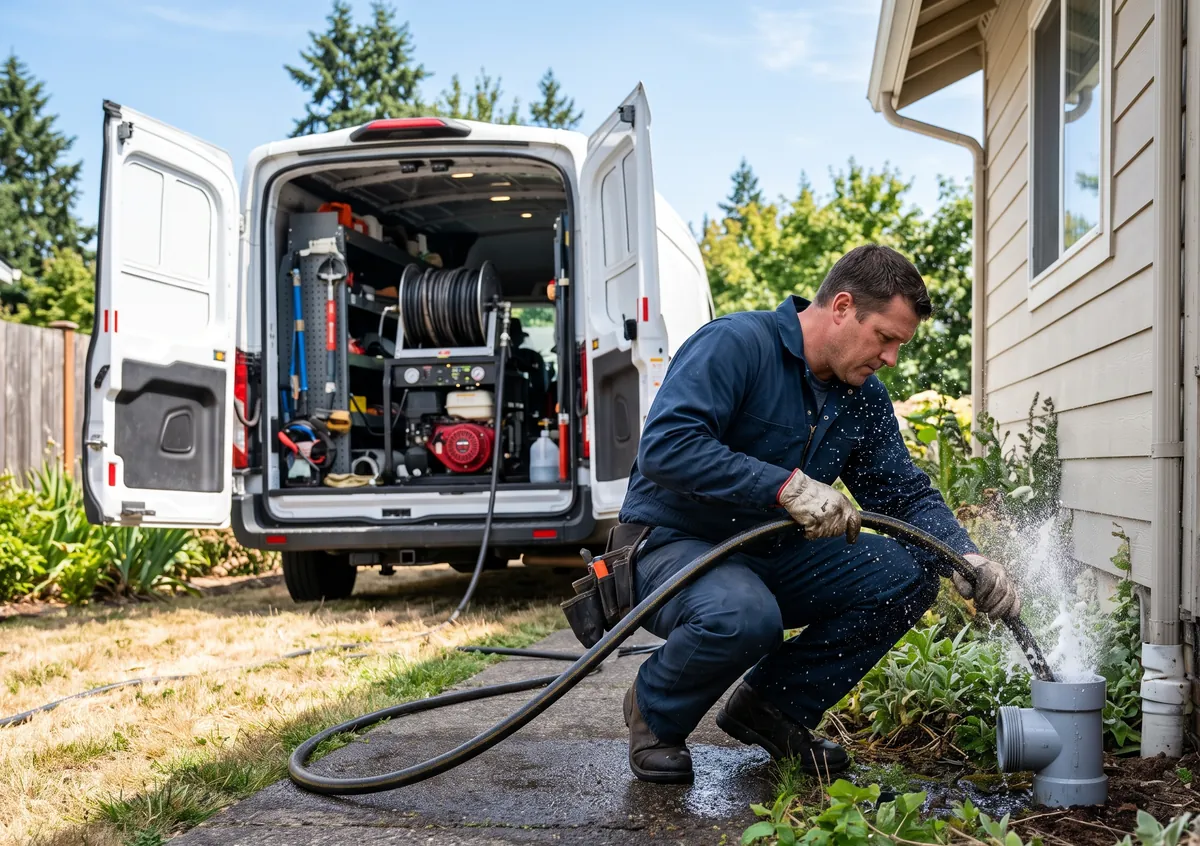
Hydro jetting vs snaking: snaking punches a hole through a clog and is plenty for a single blockage, while hydro jetting scours the whole pipe wall clean and is the right call for grease, roots, recurring clogs, and commercial lines, at roughly twice the price.
I've run both a cable machine and a hydro jetter for fifteen years, and I've seen jetting save a restaurant from a weekly backup and I've seen it crack a homeowner's brittle old pipe wide open. Both tools are right sometimes and wrong other times. Here's how to tell which one your line actually needs, and when a tech is upselling you into the expensive one for no reason.
If you're still trying to figure out whether you even need a pro, start with how to unclog a drain. This article is for when the clog is past what a homeowner can reach.
How Snaking Works
Snaking, also called cabling or rodding, runs a steel cable down the line with a cutting or grabbing head on the end. A power machine spins the cable so the head bores through the clog. The tech feels the resistance, works the head through it, and pulls back whatever was blocking the flow.
What snaking does well: it breaks through a blockage fast and cheap. A hairball, a wad of roots, a paper clog, a grease plug. The cable bores a channel and the water starts flowing again.
What snaking does not do: it doesn't clean the pipe wall. The cable cuts a hole through the clog, but the grease layer, the scale, and the root hairs lining the pipe stay put. So a snaked line that was clogged by buildup tends to clog again, sometimes in weeks. That's not the cable failing. That's just what a cable does.
How Hydro Jetting Works
A hydro jetter pumps water through a special nozzle at high pressure, often 1,500 to 4,000 PSI, with jets aimed backward as well as forward. The forward jets cut into the clog, the backward jets pull the hose deeper and scour the pipe wall as it goes. The result isn't a hole through the clog. It's a pipe scrubbed back to near-bare wall.
What jetting does well: it removes grease, sludge, scale, and root hairs from the full circumference of the pipe, not just the center. It's the difference between poking a straw through a milkshake and rinsing the whole glass clean. For a line that keeps clogging from buildup, jetting actually solves the cause instead of the symptom.
What jetting costs in trade-offs: it's more expensive, it takes longer, and on the wrong pipe it can do damage. More on that below.
Side by Side
| Factor | Snaking | Hydro jetting |
|---|---|---|
| What it does | Bores a hole through the clog | Scours the entire pipe wall clean |
| Best for | A single, isolated clog | Grease, roots, recurring clogs, commercial |
| Typical cost | $150 to $300 (branch), $250 to $600 (main) | $400 to $900 |
| Speed | Fast | Slower, more thorough |
| Recurring clogs | Often returns | Addresses the cause |
| Risk to old/fragile pipe | Lower | Higher; can rupture brittle pipe |
| Roots | Cuts them, they regrow | Strips them, slower regrowth |
For the full price picture across every service, see drain cleaning cost.
When Snaking Is Plenty
I tell people this honestly because it saves them money: if you've got a single, first-time clog in one drain, snaking is the right call. You don't need to pay for jetting to clear a one-off hairball or a kid's toy in the toilet line. A cable clears it, you're back in business, and you've saved a few hundred bucks.
Snaking is the right tool when:
- It's one fixture, clogged once, not a pattern.
- The line is older or fragile and you don't want high pressure in it.
- You just need flow restored fast and cheap.
- It's a soft clog, hair or paper, that a cable grabs easily.
If a shop pushes jetting for a simple first-time clog, that's an upsell. Cabling it is the honest move.
When You Want Jetting
Jetting earns its higher price when the problem is buildup or recurrence, because it cleans the pipe instead of poking through:
- Grease. Kitchen lines and restaurants build a hard grease layer on the pipe wall. A cable bores through it and it clogs again in weeks. Jetting strips the wall. For a restaurant kitchen, jetting on a schedule is just maintenance.
- Recurring clogs. If the same line clogs every couple of months, the wall is caked and cabling isn't solving it. Jetting does.
- Roots. A cable cuts roots in the center of the pipe, but they regrow fast. Jetting strips them off the wall more completely, buying more time before they come back. (Roots will always come back eventually if the pipe has cracks; jetting just slows the cycle.)
- Commercial lines. Higher volume, more grease, bigger pipe. Jetting is usually the standard.
If you're seeing whole-house slow drains or multiple fixtures backing up, that's a main-line issue, and you'll want to read signs your sewer line is clogged before deciding on a service.
The Old-Pipe Warning Nobody Gives You
This is the part I wish more techs were honest about. Hydro jetting puts real pressure into your pipe, and not every pipe can take it.
If your home is older, you may have clay tile, Orangeburg (a tar-paper pipe used mid-century), cast iron that's rusted thin, or pipe with existing cracks. Blast 4,000 PSI of water into a brittle, cracked, or corroded line and you can rupture it. I've seen a jetter turn a clogged-but-intact old line into a collapsed line that needed excavation. That's a clog problem becoming a four-figure dig.
So the rule is simple: camera the line before you jet an older or unknown pipe. A sewer camera shows the tech the pipe material and condition. If it's solid PVC or healthy cast iron, jet away. If it's cracked clay or thin cast iron, a careful cabling or a repair is the smarter path. Any tech who wants to jet a 1950s line without scoping it first is gambling with your pipe, not yours to lose.
Camera First, Almost Always
For any significant main-line decision, I run a camera before I commit to a method. The camera tells me three things that change the whole plan: what the pipe is made of, where the clog actually sits, and whether the real problem is buildup (jet it), roots (cut or jet, then plan for repair), or a structural failure like a belly or a collapse (no amount of cleaning fixes that, it needs a repair).
A camera inspection runs $150 to $400 and many shops credit it toward the work. It's the cheapest way to avoid paying for the wrong service. Snaking a collapsed pipe does nothing. Jetting a cracked pipe makes it worse. The camera keeps you from buying either mistake.
What Each One Feels Like on a Job
People ask me what the difference looks like in practice, so here's the field version. When I cable a clog, I feel for it. The cable goes slack, then bites, and I work the head back and forth until the resistance gives and water rushes past. I pull the cable and see what came back: a hairball, a wad of roots, a chunk of grease. Five minutes later the drain runs and the customer's happy. But if that clog was buildup on the wall, I already know I might see them again, because all I did was bore a channel through the middle.
When I jet a line, it's slower and it's wetter. I feed the hose in, the nozzle's back-jets pull it deeper, and the scouring jets strip the wall as it goes. I work it in passes, advancing and retreating, and when I pull the hose the water coming back runs from black sludge to nearly clear. That's the tell that the pipe is actually clean, not just open. A jetted grease line can go a year or more before it needs attention again, where a cabled one might clog in a month.
That's the whole tradeoff in a sentence: cabling restores flow, jetting restores the pipe. You pay more for the second one because you're buying a cleaner pipe and a longer gap before the next call.
A Note on DIY and Maintenance
You can't jet at home, and renting a power cable machine is genuinely risky if you don't know how to handle it. But you can keep lines from getting to the jetting stage. A Zip-It hair tool on the tubs and a monthly enzyme drain treatment on slow kitchen lines digest the organic buildup that turns into the grease clogs jetting exists to fix. Maintenance is cheaper than either service. If you're on a septic system, the EPA's septic guidance explains why enzymes are the safe choice and caustic cleaners aren't, since the harsh stuff kills the bacteria your tank relies on. And never pour caustic chemical cleaner in as a substitute; it doesn't clean the wall and it can damage the pipe and the seals.
Frequently Asked Questions
What is the difference between hydro jetting and snaking?
Snaking runs a steel cable down the line and bores a hole through the clog to restore flow. Hydro jetting pumps water through a nozzle at high pressure to scour the entire pipe wall clean. Cabling restores flow, jetting restores the pipe. That's the whole tradeoff in a sentence.
Is hydro jetting better than snaking?
Not always, it depends on the problem. For a single, first-time clog, snaking is faster, cheaper, and plenty. For grease, recurring clogs, roots, and commercial lines, jetting is better because it cleans the wall instead of just poking through, so the clog doesn't come right back. Match the method to the actual cause.
How much does hydro jetting cost compared to snaking?
Jetting typically runs $400 to $900, while snaking is $150 to $300 on a branch line and $250 to $600 on a main line. You pay roughly twice as much for jetting because you're buying a cleaned pipe and a longer gap before the next call, not just restored flow.
Can hydro jetting damage old pipes?
Yes, and this is the warning too few techs give. Blasting up to 4,000 PSI into brittle clay, Orangeburg, or rusted-thin cast iron can rupture it and turn a clogged-but-intact line into a collapsed one that needs excavation. The rule is simple: camera the line before you jet any older or unknown pipe.
Why does my drain keep clogging even after it was snaked?
Because a cable cuts a hole through the clog but leaves the grease, scale, and root hairs lining the pipe wall in place. If your clog came from buildup, a snaked line tends to clog again, sometimes within weeks. That's not the cable failing, that's just what a cable does, and it's the signal that the line needs jetting instead.
Do I need a camera inspection before choosing a service?
For any significant main-line decision, yes. A camera tells the tech what the pipe is made of, where the clog sits, and whether the real problem is buildup, roots, or a structural failure like a belly or collapse. It runs $150 to $400, many shops credit it toward the work, and it keeps you from paying for the wrong service entirely.
Bottom Line
Snaking and jetting aren't competitors, they're tools for different problems. A single, first-time clog gets snaked, fast and cheap, and you don't need to pay for more. Grease, roots, recurring clogs, and commercial lines get jetted, because only jetting cleans the pipe wall and stops the clog from coming back. But before you jet an older or unknown line, get a camera in there, because high pressure in a brittle pipe can turn a clog into a collapse. Match the method to the actual problem, scope before you commit on anything serious, and you'll pay for the fix you need instead of the one that pays the tech the most. When you need someone who'll camera first and quote straight, our pros directory is a good place to start.